Relevance to the Theme of the Module
The Eleja Manor Park project is a significant example of how creative industries can play a transformative role in revitalizing and valorizing empty public spaces. By integrating cultural heritage preservation with community engagement and tourism development, the project addresses multiple facets of urban and rural transformation. It exemplifies how cultural and creative initiatives can rejuvenate neglected spaces, foster community pride, and enhance regional identity, aligning perfectly with the module’s focus on the role of creative industries in urban and rural transformation.
Project Overview: Objectives and Methods
Objectives:
- To restore and enhance the historical and cultural significance of Eleja Manor Park.
- To promote tourism and attract visitors to the Jelgava Municipality.
- To engage the local community through cultural and educational activities.
Methods:
The Eleja Manor Park project, initiated by the Jelgava Municipality, involved extensive restoration and development efforts. Key methods included:
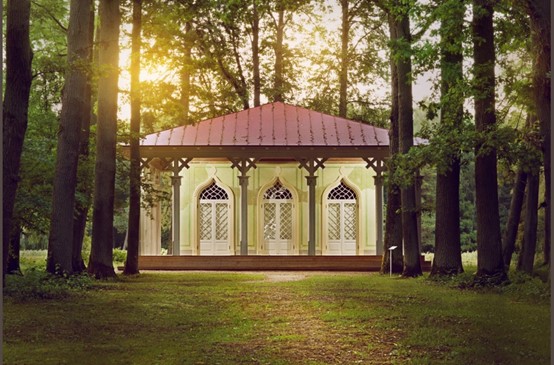
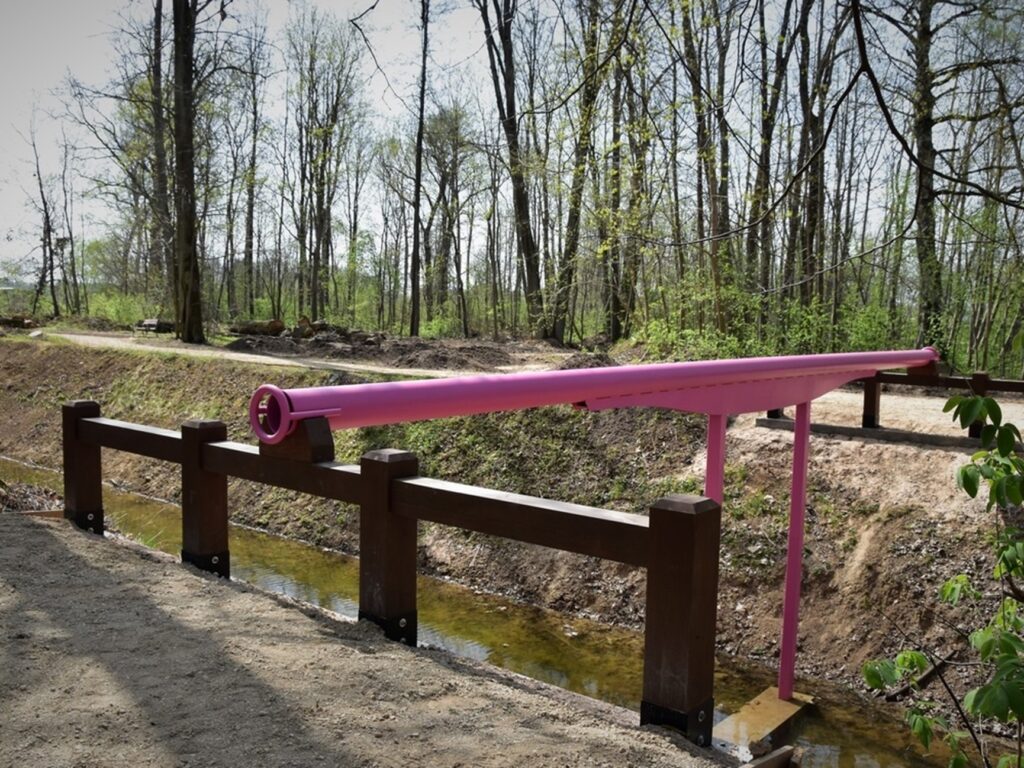
Restoration of historical structures: Restoration of the Tea House, historical paths, and the ancient baron’s cemetery. A bridge was built over the pond to the peninsula, and two interactive objects were created for visitors: the sculpture “Love” by sculptor Gleb Pantelejev, and the environmental object “Saruna.”
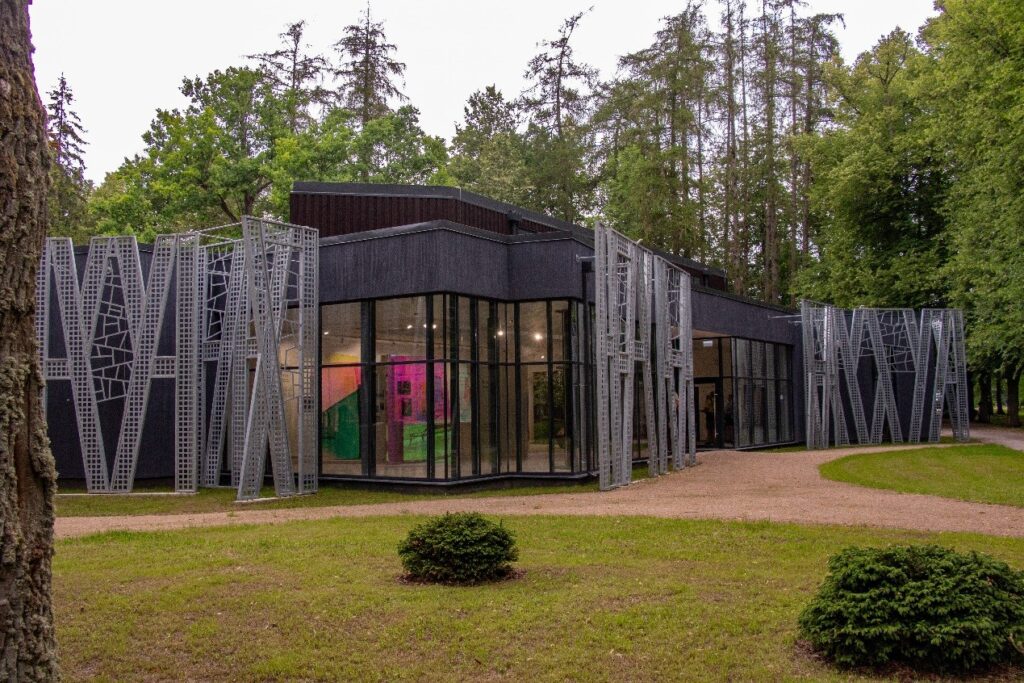
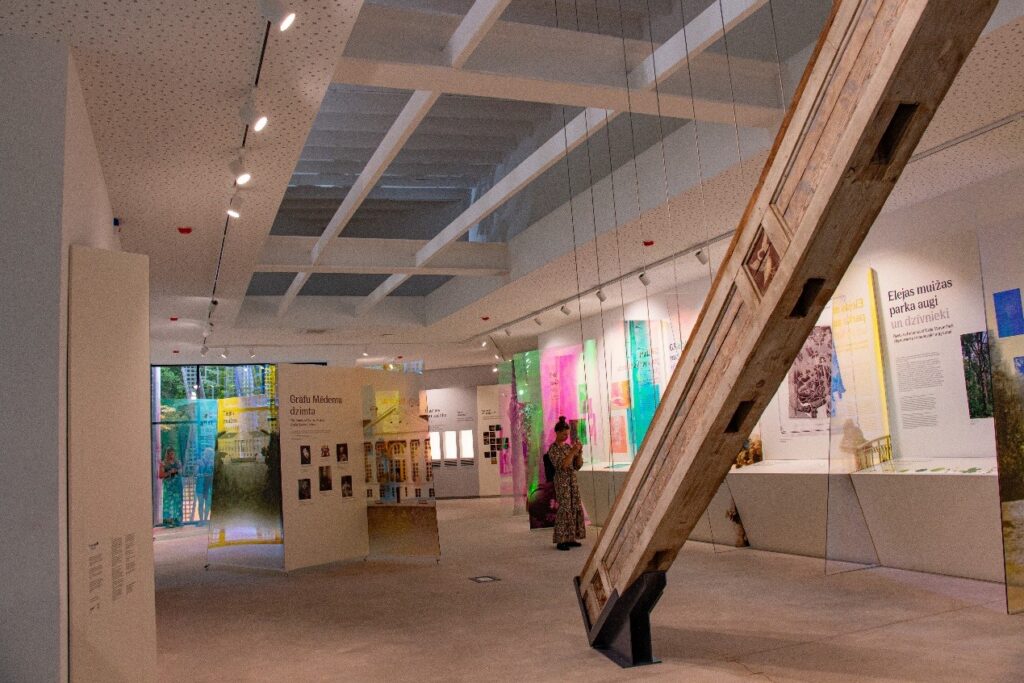
Creation of an exhibition hall: In 2022, an exhibition hall was opened, housing a historical exhibition about the Eleja manor complex and significant figures in its development.
Development of a mobile application: A mobile app was created to provide visitors with information about the history of Eleja Manor, the Tea House, the biodiversity of the park, and its environmental objects. The route of Eleja Manor Park can also be found in the mobile application Tours Across Baltics.
Cultural events and activities: The Tea House hosts various cultural events, and tourist groups are offered the opportunity to enjoy tea ceremonies. The park is freely accessible to the public and is a popular walking spot for both locals and tourists.
Outcomes Results and impacts
Outcomes:
The Eleja Manor Park and exhibition hall have become a tourism and cultural heritage hub with an ever-increasing number of visitors.
The Tea House won the “Latvijas’ Construction of the Year Awards 2015” jury’s recognition in the “Restoration” category.
Results:
The number of visitors has grown significantly, from 3,116 in 2016 to 13,371 in 2023.
Positive feedback from visitors and professionals, highlighting the successful restoration and cultural programming.
Enhanced visibility and reputation of Eleja Manor Park as a cultural and tourist destination.
Impacts:
Stimulated local tourism and economic activity, benefiting local businesses and the community.
Fostered a sense of community pride and involvement through cultural events and activities.
Preserved and promoted the cultural heritage of Eleja Manor, making it accessible to a broader audience.
Potential for Replication in Other Regions
The Eleja Manor Park project offers a versatile model for other regions seeking to revitalize and valorize empty public spaces through creative industries:
Scalability: The project’s framework can be scaled to fit different regions, from small towns to larger urban areas.
Adaptability: The core idea of using cultural heritage and creative industries to transform neglected spaces can be adapted to various contexts, focusing on local history and community needs.
Collaborative Approach: The project’s success was due in part to the collaboration between local governments, cultural institutions, and the community. This approach can be replicated to foster similar partnerships in other regions.
Educational Integration: The incorporation of educational components, such as historical exhibitions and mobile applications, can be tailored to local schools and universities, ensuring that the project has a broad and lasting impact.