Relevance to the Theme of the Module
The Skaistkalne project is a prime example of how creative industries can contribute to the valorization of natural and cultural heritage. By integrating educational and interactive elements into the preservation of natural landmarks, the project addresses multiple facets of cultural and environmental sustainability. It exemplifies how cultural and creative initiatives can enhance public awareness, foster community engagement, and promote sustainable tourism, aligning perfectly with the module’s focus on the role of creative industries in valorizing empty spaces.
Project Overview: Objectives and Methods
Objectives:
- To preserve and promote the unique geological and geomorphological features of the Skaistkalne area.
- To provide educational and cultural experiences related to the Skaistkalne karst phenomena.
- To attract tourists and enhance the local economy through sustainable tourism.
Methods:
The Skaistkalne project involved the creation of an interactive and educational exposition in the Skaistkalne Magazine barn. Key methods included:
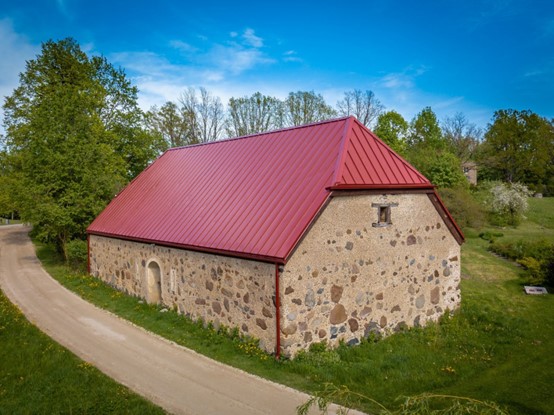
Restoration and Adaptation of Historical Structures: The Skaistkalne Magazine barn, part of the historical manor ensemble, was restored and adapted to house the new exposition.
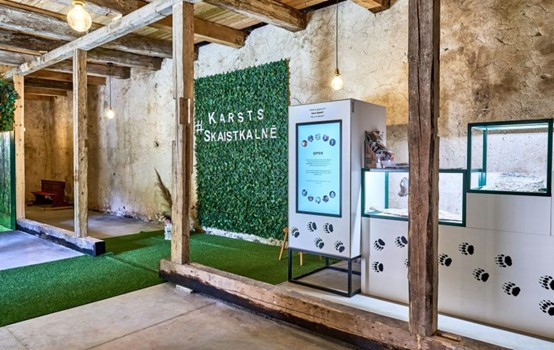
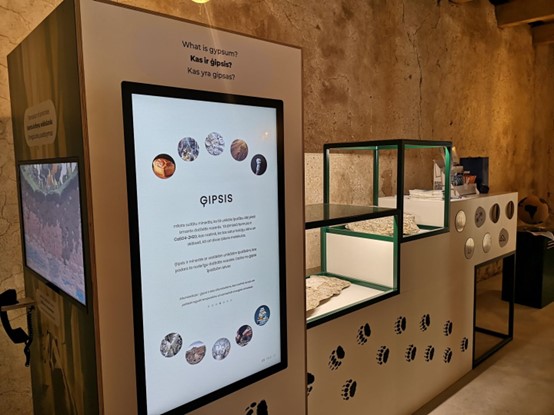
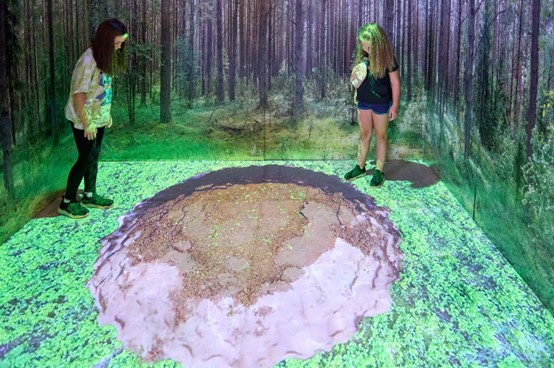
Interactive Exposition: The exposition uses multimedia solutions to explain the Skaistkalne karst phenomena, including how karst sinkholes form and what happens underground and above ground. The exposition is designed to surprise and educate visitors of all ages.
Supplementary Activities: The project includes guided hikes to the Skaistkalne karst falls, allowing visitors to see these unique natural features firsthand. Creative plaster workshops are also offered as part of the educational experience.
Outcomes Results and impacts
Outcomes:
The interactive exposition was opened in July 2023 and has since attracted 1,073 visitors.
The project successfully found innovative solutions to create an exposition in an unheated building, using materials and multimedia suitable for outdoor conditions.
Results:
Increased public awareness and understanding of the Skaistkalne karst phenomena.
Positive feedback from visitors, highlighting the educational and interactive nature of the exposition.
Enhanced visibility and reputation of Skaistkalne as a unique natural and cultural destination.
Impacts:
Stimulated local tourism and economic activity, benefiting local businesses and the community.
Fostered a sense of community pride and involvement through educational and cultural activities.
Promoted sustainable tourism practices by highlighting the importance of preserving natural landmarks.
Potential for Replication in Other Regions
The Skaistkalne project offers valuable insights for other regions looking to leverage creative industries for the valorization of natural and cultural heritage:
Flexibility: The concept of creating interactive and educational expositions can be adapted to various natural and cultural contexts, focusing on local landmarks and phenomena.
Community-Centric Approach: The project’s emphasis on community involvement and education can be replicated to ensure that similar initiatives resonate with the local population.
Sustainable Tourism: By promoting sustainable tourism practices, the project provides a model for balancing economic development with environmental preservation.
Innovative Solutions: The project’s use of innovative materials and multimedia solutions for unheated buildings can be applied to other regions facing similar challenges.